UP ARTS GALLERY BLOGS
Follow artists. Hear their stories. Collect when it feels right.
“Community-Driven Creative Marketplace”
Your "Community Curator"
When people talk about creativity, they often focus on the final result — the painting on the wall, the sculpture on the pedestal, the song on the radio, or the solution to a difficult problem.
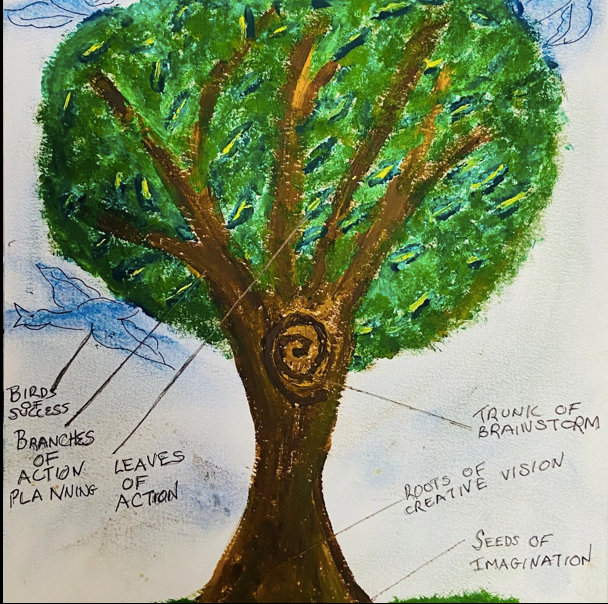
The Hidden Engine Behind Creativity: How Imagination, Beliefs, and Mindset Work Together
When people talk about creativity, they often focus on the final result — the painting on the wall, the sculpture on the pedestal, the song on the radio, or the solution to a difficult problem.
But creativity rarely starts with the finished idea.
It almost always begins with imagination.
Imagination is the quiet starting point — the place where ideas first begin to take shape before they ever exist in the real world.
For artists, entrepreneurs, writers, designers, and everyday problem-solvers, imagination is the foundation that creativity, beliefs, and mindset are built on.
Think of it like a small ecosystem inside the mind.
Imagination: The Seed of Everything
Imagination is the ability to picture something that does not yet exist.
It’s the mental space where possibilities live.
Before an artist paints a landscape, they imagine the mood, the colors, or the story behind it.
Before a business launches a product, someone imagines how it could work.
Before a child builds a castle out of blocks, they imagine what the castle should look like.
A helpful analogy is a garden.
Imagination is the seed.
Without seeds, nothing grows.
If imagination is limited, creativity struggles to grow because there is nothing new to work with.
Creativity: Turning Ideas Into Something Real
Creativity is what happens when imagination moves into action.
If imagination is the seed, creativity is the plant growing from it.
It’s the process of taking those imagined ideas and shaping them into something tangible:
- A painting
- A new technique
- A solution to a problem
- A different way of seeing something
Artists understand this naturally. The painting you see on the wall existed in the artist’s imagination long before the brush touched the canvas.
But creativity isn't only for artists.
It’s used every day by:
- teachers solving classroom challenges
- parents guiding children
- engineers designing tools
- chefs inventing new recipes
Creativity is simply imagination put into motion.
Beliefs: The Soil That Supports Growth
Now imagine planting a seed.
Whether it grows depends heavily on the soil.
Beliefs play a similar role in the mind.
Beliefs shape what we think is possible.
If someone believes:
- “I'm not creative.”
- “My ideas aren't good enough.”
- “People won’t care about what I make.”
then the imagination seed struggles to grow.
But if the belief is:
- “Ideas are worth exploring.”
- “Every artist starts somewhere.”
- “Experimenting is part of the process.”
then creativity has a place to take root.
Beliefs determine whether imagination feels safe enough to expand.
Mindset: The Climate of the Garden
If imagination is the seed and beliefs are the soil, then mindset is the climate.
Mindset is the overall attitude we carry toward learning, growth, and possibility.
A growth-oriented mindset sounds like:
- “I can learn this.”
- “Mistakes are part of improving.”
- “This is an experiment.”
A restrictive mindset sounds like:
- “I’m not good enough.”
- “I shouldn’t try.”
- “If it isn’t perfect, it failed.”
The difference is enormous.
A supportive mindset creates the mental climate where imagination and creativity can grow freely.
How the Four Work Together
These four elements constantly interact.
You can think of them as a cycle.
Imagination → Creativity → Beliefs → Mindset → More Imagination
- Imagination produces ideas
- Creativity turns ideas into something real
- Successful experiences strengthen helpful beliefs
- Helpful beliefs reinforce a positive mindset
- A positive mindset allows imagination to expand even further
Each step strengthens the next.
Why This Matters for Artists
Artists live inside this cycle every day.
The creative process often moves through phases like:
- imagining possibilities
- experimenting
- doubting
- discovering new confidence
- imagining again
When artists understand this cycle, something powerful happens.
They begin to realize:
- creative blocks are normal
- doubt is part of the process
- imagination can be intentionally nurtured
Instead of feeling stuck, artists learn how to work with the cycle rather than fight it.
Imagination becomes a tool instead of something mysterious.
Why This Matters for Everyone
Even people who don’t consider themselves artists rely on this system constantly.
Every new solution, idea, improvement, or innovation begins with imagination.
Children use imagination naturally.
Adults often forget how powerful it is.
Re-engaging imagination can improve:
- problem solving
- confidence
- innovation
- emotional resilience
- personal growth
Imagination expands what we believe is possible.
And what we believe is possible often determines what we attempt in the real world.
A Simple Way to Strengthen Imagination
One of the easiest ways to encourage imagination is simply to ask better questions.
Instead of asking:
“Can I do this?”
Try asking:
- “What if this worked?”
- “What would this look like if I tried it?”
- “What would happen if I experimented?”
These questions open the door for imagination to begin working again.
And once imagination begins moving, creativity usually follows.
The Quiet Power of the Imaginative Mind
Creativity often feels mysterious, but its foundation is surprisingly simple.
Imagination begins the process.
Beliefs support it.
Mindset protects it.
Creativity expresses it.
Together, they form the quiet engine behind artistic expression, innovation, and personal growth.
And the best part?
Every person already has this system within them.
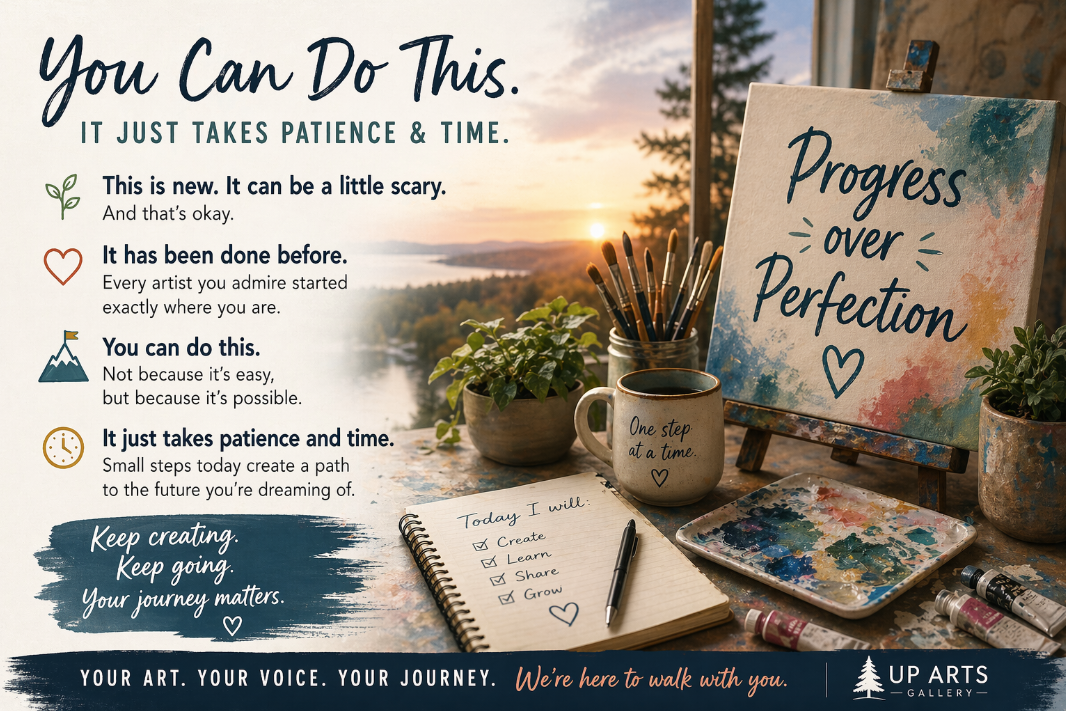
Sometimes it just needs a little space — and permission — to start growing again.
We are expanding our path to understanding how imagination impacts our lives with a new section to Up Arts Gallery. Please take a look at our first entry which is a short story about an artist and her first time at an art festival.