UP ARTS GALLERY BLOGS
Follow artists. Hear their stories. Collect when it feels right.
“Community-Driven Creative Marketplace”
Your "Community Curator"
As artists, we often focus on improving our skills — better technique, stronger composition, more consistency, more sales.
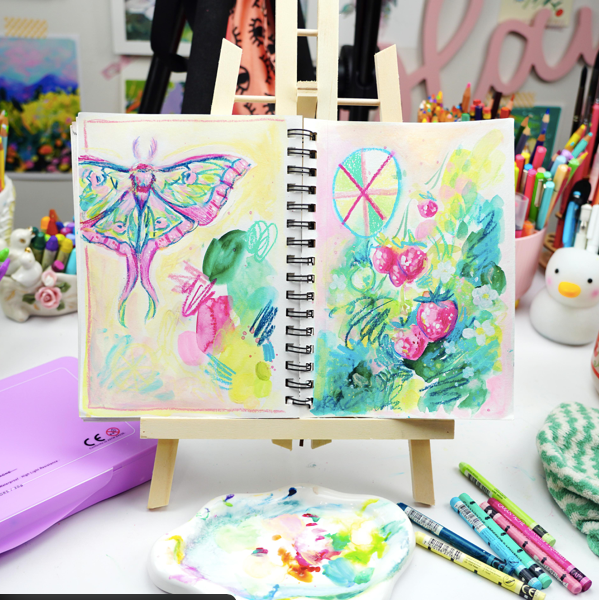
Where It All Begins: Helping Your Imagination Grow (So Everything Else Can Too)
As artists, we often focus on improving our skills — better technique, stronger composition, more consistency, more sales.
But underneath all of that is something quieter… and far more important:
Imagination.
Imagination is where every piece of art begins.
Before the brush touches the canvas, before the clay is shaped, before the camera clicks — something is imagined first.
And here’s the part that often gets overlooked:
Your imagination directly shapes your creativity, your beliefs, and your mindset.
If imagination feels blocked, everything else can feel harder.
If imagination is active and open, everything else tends to follow.
How It All Works Together (In Real Life, Not Theory)
Let’s simplify this in a way that actually feels usable.
- Imagination → “What if I tried this?”
- Creativity → “Let me make something from that idea.”
- Beliefs → “That worked… maybe I can do this.”
- Mindset → “I’m growing. I can keep going.”
And then it loops.
Every small creative action feeds your belief.
Every helpful belief supports your mindset.
And your mindset either opens or closes the door to imagination.
The Truth Most Artists Need to Hear
Sometimes we think we need something big to improve:
- more time
- better materials
- a breakthrough idea
- motivation
But often, what actually helps is much smaller.
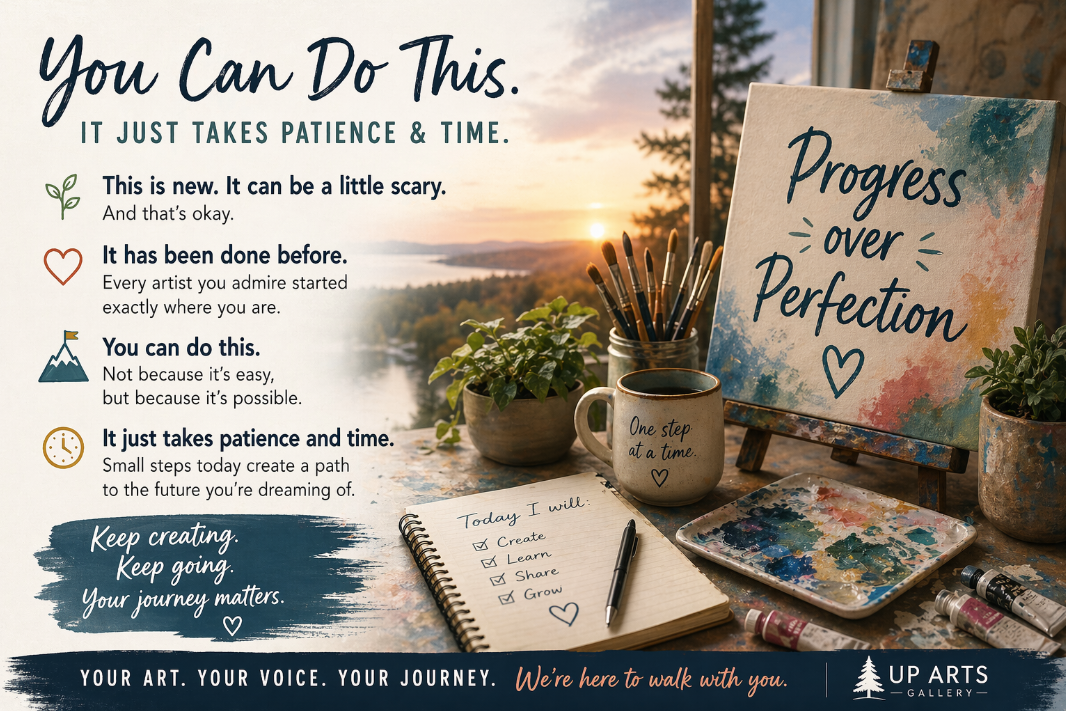
It may seem overly simple, but simple — and one step at a time — is how we as artists began… and how we grow.
You didn’t start as a finished artist.
None of us did.
You started with curiosity. With play. With small attempts.
That same approach still works.
Simple Ways to Boost Your Imagination (Daily, No Pressure)
These are not complicated systems.
They’re small shifts that reopen the door to imagination.
1. Give Yourself Permission to Make “Unimportant” Art
Not everything has to be:
- portfolio-worthy
- sellable
- posted
- perfect
Try this:
- Spend 10–15 minutes creating something no one will ever see
This removes pressure and gives imagination room to move again.
2. Change One Small Thing
Imagination doesn’t need a full reset — it often just needs a slight shift.
Try:
- a different color palette
- a new tool
- a different subject
- working faster or slower than usual
Think of it like walking a familiar path but taking a side trail.
3. Start With “What If…”
Instead of waiting for inspiration, prompt it.
Ask:
- “What if I made this looser?”
- “What if I simplified this?”
- “What if I exaggerated this part?”
These small questions activate imagination immediately.
4. Keep an Idea List (Not a To-Do List)
Artists often put pressure on themselves to act on ideas.
Instead, just collect them.
- random thoughts
- color ideas
- concepts
- feelings
This becomes a low-pressure space where imagination can exist without expectation.
5. Let Yourself Be a Beginner Again (Even for a Moment)
Trying something new — even briefly — resets your imagination.
- sketch with your non-dominant hand
- try a new medium for 10 minutes
- draw something you’ve never drawn before
This reconnects you with curiosity instead of performance.
6. Limit Input to Expand Output
Too much scrolling, comparing, and consuming can quietly shut down imagination.
Try:
- creating before consuming
- taking short breaks from social media
- spending time observing real life instead of screens
Imagination grows when your mind has space.
7. Finish Something Small
Completion builds belief.
And belief fuels mindset.
Instead of starting something big:
- finish a quick sketch
- complete a small study
- finalize a simple piece
Each finish quietly says:
“I can do this.”
When Things Feel Stuck
Every artist goes through phases where imagination feels distant.
That doesn’t mean it’s gone.
It usually means:
- it’s tired
- it’s overwhelmed
- or it’s been under pressure for too long
In those moments, don’t push harder.
Go smaller.
Simpler.
Gentler.
A Simple Way to Think About It
Imagine your creative process like a fire.
- Imagination is the spark
- Creativity is the flame
- Beliefs are the fuel
- Mindset is the air that keeps it going
If the fire feels low, you don’t need to rebuild everything.
Sometimes you just need a small spark again.
A Quiet Reminder
You already have everything you need to create.
Your imagination hasn’t disappeared.
It just needs space, permission, and small consistent moments to come forward again.
And those moments don’t have to be big.
A few minutes.
A small idea.
One simple step.
That’s how it started.
That’s how it grows.
And that’s how it continues.