UP ARTS GALLERY BLOGS
Follow artists. Hear their stories. Collect when it feels right.
“Community-Driven Creative Marketplace”
Your "Community Curator"
🎨 How to Make Your Art Connect More
A simple guide for artists from Up Arts Gallery
Most artists don’t struggle with creating.
They struggle with this:
“Why do some pieces connect more than others?”
You’ve probably experienced it:
- One piece gets a lot of attention
- Another (just as good) gets overlooked
It’s not random.
It often comes down to how people experience your work—not just what you created.
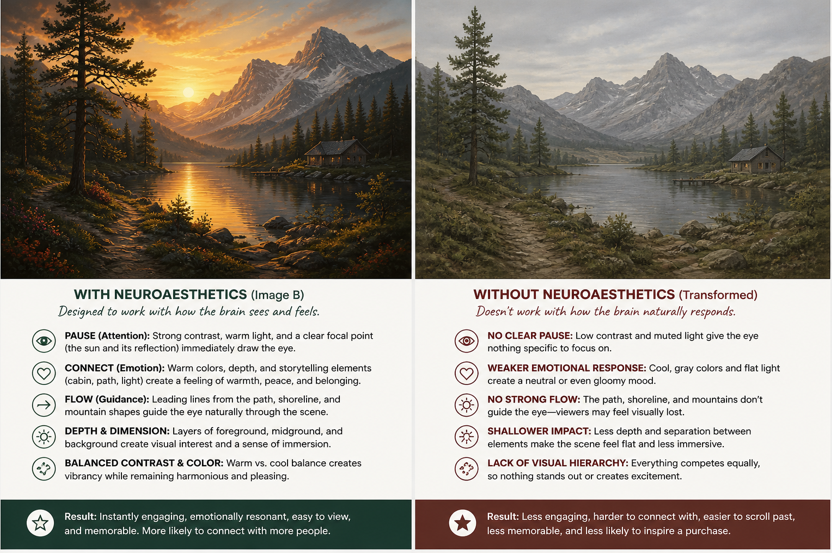
This is where ideas from Neuroaesthetics can help in a very simple, practical way.
And the good news?
👉 You don’t need to change your style
👉 You don’t need to “sell out”
👉 You don’t need to overthink it
You just need to make a few intentional choices.
🧠 The Simple Shift
Instead of asking:
“Do I like this piece?”
Also ask:
“How will someone experience this piece?”
That one shift changes everything.
🎯 The 3-Part Experience
Pause → Connect → Buy
Every viewer moves through these moments:
1. PAUSE → They stop
2. CONNECT → They feel something
3. BUY → They begin to imagine it in their life
Your job isn’t to control this.
Your job is to support it.
🎨 How to Apply This to Your Art (While You Create)
1. Strengthen the PAUSE
Ask:
👉 What makes someone stop?
Try:
- Slightly increasing contrast in one area
- Making one element more dominant
- Using color intentionally instead of evenly
Simple example:
A painting feels quiet → add a subtle light source or deepen shadows
👉 Result: The eye has somewhere to land
2. Clarify the CONNECT
Ask:
👉 What is the main feeling?
Choose one:
- Calm
- Energy
- Nostalgia
- Curiosity
Then support it with:
- Color (warm vs cool)
- Simplicity vs detail
- Light and atmosphere
Simple example:
Too many competing ideas → simplify the composition
👉 Result: The feeling becomes clearer and stronger
3. Improve the FLOW
Ask:
👉 How does the eye move?
Look for:
- Where the viewer starts
- Where they go next
Use:
- Lines
- Repetition
- Shapes
- Balance
Simple example:
The eye feels “stuck” → add a subtle directional element
👉 Result: The piece feels easier and more enjoyable to view
🖼️ How to Apply This to How You Present Your Art
This is where many artists miss a big opportunity.
You don’t just create the experience—you also help shape it.
💬 1. Talk About the Feeling
Instead of:
“This is an abstract piece I did last year…”
Try:
“I wanted this piece to feel calm and open, so I kept the colors soft and the composition simple.”
👉 This helps buyers understand what they already feel
🏠 2. Help Them Imagine It in Their Life
People buy art when they can see it in their space.
You can help by:
- Showing your work in a room setting
- Talking about where it might fit (home, office, studio)
- Mentioning size and feeling together
👉 Example:
“This works really well in a quiet space like a bedroom or reading area.”
📸 3. Use Better Photos (Simple Improvements Matter)
- Natural lighting
- Clean backgrounds
- One close-up + one full shot
- One “in a space” image if possible
👉 This alone can increase engagement significantly
🧭 4. Make It Easy to Understand
You don’t need long explanations.
Simple works best:
- Title
- Medium
- Size
- Short feeling-based description
⚠️ What to Avoid
- Don’t turn this into a formula
- Don’t chase what you think will sell
- Don’t lose your instinct
👉 Your intuition is still your strongest tool
This just helps guide it.
🌱 A Simple Practice You Can Use Right Away
Before finishing a piece, ask:
- Did I create a clear Pause?
- Is the feeling easy to recognize?
- Does the eye flow naturally?
Then when presenting it:
- Can I describe the feeling simply?
- Can someone imagine it in their life?
🎯 Why This Can Help You Sell More Art
When you apply this naturally:
- More people stop at your work
- More people feel something
- More people remember it
- More people feel confident buying it
Not because you changed your art…
👉 But because you made the connection clearer
🧩 Final Thought
You’re already doing more of this than you think.
This isn’t about learning something completely new.
It’s about:
- recognizing what works
- strengthening it
- repeating it
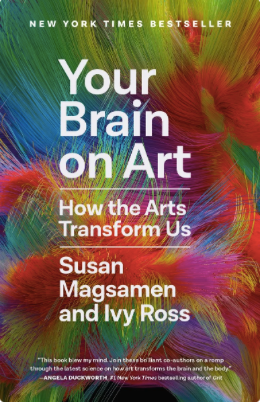
If you're interested in better understanding neuroaesthetics, you're going to find this book a great read.
What is art? Many of us think of the arts as entertainment—a luxury of some kind. In Your Brain on Art, authors Susan Magsamen and Ivy Ross show how activities from painting and dancing to expressive writing, architecture, and more are essential to our lives.
They expand our understanding of how playing music builds cognitive skills and enhances learning; the vibrations of a tuning fork create sound waves to counteract stress; virtual reality can provide cutting-edge therapeutic benefit; and interactive exhibits dissolve the boundaries between art and viewers, engaging all of our senses and strengthening memory.