UP ARTS GALLERY BLOGS
Follow artists. Hear their stories. Collect when it feels right.
“Community-Driven Creative Marketplace”
Your "Community Curator"
Here are the five most common reasons artists struggle to sell their art, based on artist surveys, gallery feedback, art-fair data, and what consistently shows up when artists talk candidly about money and sales—followed by clear, practical steps to fix each one. I’ll keep this grounded and artist-friendly, not “hustle bro” advice.

1. They Rely on Visibility Instead of Relationships
The problem
Many artists believe:
“If enough people see my work, someone will buy it.”
In reality, most art is sold through trust, not exposure.
Social media gives views, but collectors buy from artists they feel connected to.
Artists often:
- Post regularly but don’t collect contact info
- Meet buyers once at a show and never follow up
- Depend on algorithms instead of ownership
The result:
Sales spike briefly and then disappear. No repeat buyers.
How to fix it
Shift from followers → collectors
Concrete steps:
- Collect email addresses at every show (QR code + simple form)
- Send 1–2 emails per month telling real stories:
- Why you made a piece
- What inspired it
- Where it will be shown next
- Treat email as a personal studio letter, not marketing
One engaged collector is worth more than 1,000 followers.
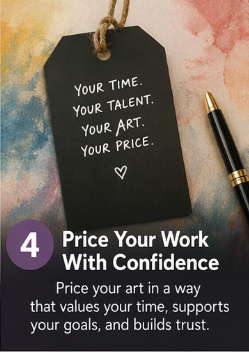
2. They Don’t Clearly Communicate Value (Price Feels “Awkward”)
The problem
Artists often underprice or apologize for pricing because:
- They don’t know how to explain why the work costs what it does
- They fear rejection
- They feel uncomfortable talking about money
Collectors aren’t confused by price — they’re confused by uncertainty.
The result:
- Inconsistent pricing
- Hesitation at the point of sale
- Buyers walk away “to think about it”
How to fix it
Anchor price to story and process
Concrete steps:
- Prepare a simple, repeatable explanation:
- Time involved
- Materials
- Skill developed over years
- Emotional or conceptual intent
- Display prices clearly (no “ask me”)
- Offer entry points:
- Small originals
- Limited prints
- Studies or sketches
Confidence sells more than discounts.
3. They Treat Art Sales as Random Events, Not a System
The problem
Many artists sell when:
- A show happens
- A gallery calls
- A post performs well
But there’s no repeatable process.
The result:
- Income is unpredictable
- Long dry spells
- Burnout and discouragement
How to fix it
Build a simple sales rhythm
Concrete steps:
- Create a 12-month calendar:
- Shows
- New work releases
- Studio updates
- Use a basic system:
- Capture → Welcome → Nurture → Offer
- Track:
- Who bought
- What they bought
- Where you met them
This does not require complex software—just consistency.
Professional artists don’t sell more art—they sell more predictably.
4. They Avoid Self-Promotion Because It Feels Inauthentic
The problem
Many artists believe:
“If my art is good enough, it should speak for itself.”
But silence doesn’t feel authentic to buyers — it feels distant.
The result:
- People admire the work but don’t know how to support the artist
- Missed opportunities
- Low confidence around selling
How to fix it
Reframe promotion as invitation, not persuasion
Concrete steps:
- Share process, not pitches
- Talk about:
- Mistakes
- Experiments
- Meaning
- Use language like:
- “I’m sharing this because…”
- “This piece came from…”
- “If this resonates, it’s available…”
Selling art is not convincing someone—it’s giving permission to care.
5. They Don’t Follow Up After Interest Is Shown
The problem
A collector says:
“I love this.”
And the artist says:
“Thank you!”
…and that’s where it ends.
The result:
Interest fades. The moment is lost.
How to fix it
Follow up without pressure
Concrete steps:
- Ask permission:
- “Would you like me to email you when I finish similar pieces?”
- Send a follow-up:
- Image of the piece
- Short note about it
- No hard sell
- Invite:
- Studio visits
- Previews
- VIP lists
Most sales happen after the second or third interaction.
The Big Picture (Why This Matters)
Artists don’t fail because:
- Their work isn’t good enough
- People don’t value art
- The market is “too saturated”
They struggle because:
- They weren’t taught how selling art actually works
- They lack simple systems that respect their values
One Simple Action That Solves Multiple Problems
If you did one thing:
Start collecting emails and sending honest, story-based updates
You would:
- Build relationships
- Reduce awkward selling
- Create predictable income
- Stay authentic
Be sure to check out the the next two blogs for even more help with these challenges.